other Australian States
notable resource provinces
The Curnamona Province extends from Olary, in the northeast of South Australia, 450 kilometres north east of Adelaide, to east of Broken Hill across the New South Wales border. Broken Hill Domain in the east (largely in NSW but extending a short distance into SA). The Curnamona Province has a long history of exploration following on from the discovery of the world-class Broken Hill Pb–Zn–Ag deposit in 1883. Numerous mineral occurrences have been located throughout the district. The major challenge facing exploration in the region is exploring effectively through thick transported regolith.
The Gawler Craton is an extensive region approximately 440 000km2 of central South Australia. In 2001, Minotaur Resources — now Minotaur Exploration (ASX: MEP) — put the Gawler Craton back on the mining map when it discovered the huge Prominent Hill copper-gold deposit south-east of Coober Pedy in South Australia. It was, says the present Prominent Hill mine operator, OZ Minerals (ASX: OZL), “a stand-out greenfield discovery in Australia”.
The Eucla–Gawler region (Nullarbor Plain) is a major geological frontier, the region lies between two of the most prospective geological regions in the world, the Yilgarn Craton to the west and the Gawler Craton to the east. However, the extensive sedimentary cover associated with the Eucla Basin has led to the bedrock underlying this region being very poorly represented and understood.
The North Australian Craton is one of Australia’s major mineral provinces, containing the world’s largest zinc-lead-silver province, and major uranium, copper and gold provinces. It underlies around 80% of the Northern Territory. It extends into WA, where it includes the Halls Creek and King Leopold orogens and Kimberley Basin, and into Queensland where it includes the Mount Isa, Georgetown and Coen inliers. The Arunta region contains a number of mafic and mafic-ultramafic intrusions of varying size and age. Some of these bodies have potential for orthomagmatic nickel-copper and platinum-group-element deposits.
Rocks of the Mount Isa Province are exposed over an area in excess of 50 000 km2 in north-west Queensland, roughly centred on the township of Mount Isa. Since the discovery of copper and gold near Cloncurry in the 1860s the rocks of the Mount Isa Province have been significant producers of copper, lead, zinc and silver. Significant resources remain, with the Mount Isa Province containing 21.2% of the world’s lead resources, 11% of the world’s zinc resources, 5% of the world’s silver resources and 1.7% of the world’s copper resources.
Tasmania lies at the southern extension of the 1000-km wide Tasman Fold Belt, which occupies the eastern third of the continent. A significant discovery was the Avebury nickel deposit in 1997. It is an unusual hydrothermal nickel deposit hosted by ultramafic rocks.
– Geoscience Australia; Geological Survey WA.
“Australia has the deposits and the know-how to develop critical minerals projects reliably, sustainably and at scale.”
Geophysical exploration surveys
GEM have a deep understanding of geophysical concepts together with quality data acquisition methods. We have the know-how to apply this knowledge to various geological landscapes. Enabling us, to not only meet, but often go beyond our client’s exploration expectations. Presently, demand for SQUID technology and GEM’s dedicated operational experience, remains exceptionally high.
NSW
Copper mineralisation in NSW is predominantly associated with the world-class Macquarie Arc and Cobar Basin in the Lachlan Orogen. Copper-enriched systems in this region include the porphyry copper-gold and related skarn deposits, such as the Cadia district (Cadia East) and the Northparkes, Copper Hill and Temora districts. The New England Orogen and Broken Hill region are also prospective for copper.
NSW remains under-explored for copper, particularly in areas under cover without basement exposure where cover depths are less than 500 m. There are a range of opportunities for new discoveries, especially in the Macquarie Arc which has the highest density of known and predicted undiscovered deposits. Drilling beneath known mineralisation along the eastern margin of the Cobar Basin has consistently met with exploration success
The Critical Minerals and High-Tech Metals Exploration Program encourages more exploration to fund successful applicants to undertake drilling, geophysics and geochemistry.
Link to: NSW Critical minerals and high-tech metals exploration program
QLD
The Collaborative Exploration Initiative (CEI) aims to encourage the discovery and development of Queensland’s critical mineral deposits to help meet the growing demands of the world’s technology and renewable energy sectors.
CEI supports Queensland’s exploration companies to discover the future mines to produce the minerals and metals that the world needs.
Link to: QLD Collaborative Exploration Initiative (CEI)
NT
The Geophysics and Drilling Collaborations (GDC) program is a competitive grants program funded by the NT Government’s Resourcing the Territory program and is administered by the Northern Territory Geological Survey (NTGS).
The program co-funds projects that address geoscientific knowledge gaps, advance exploration activity, and support the discovery and development of resources in the Territory
Link to: NT Geophysics & Drilling Collaborations (CDC)
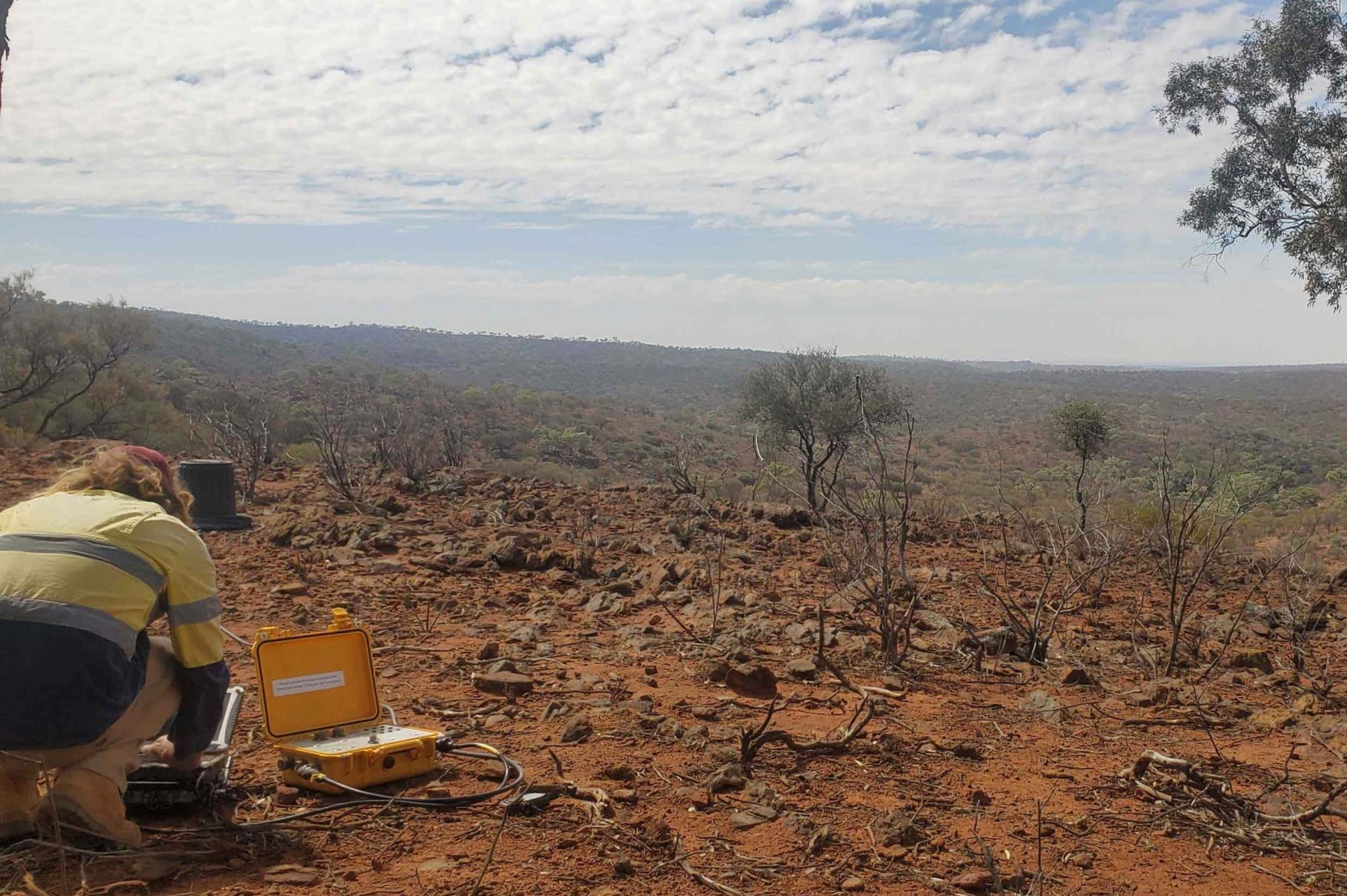
MLEM in Broken Hill for IGO 2022
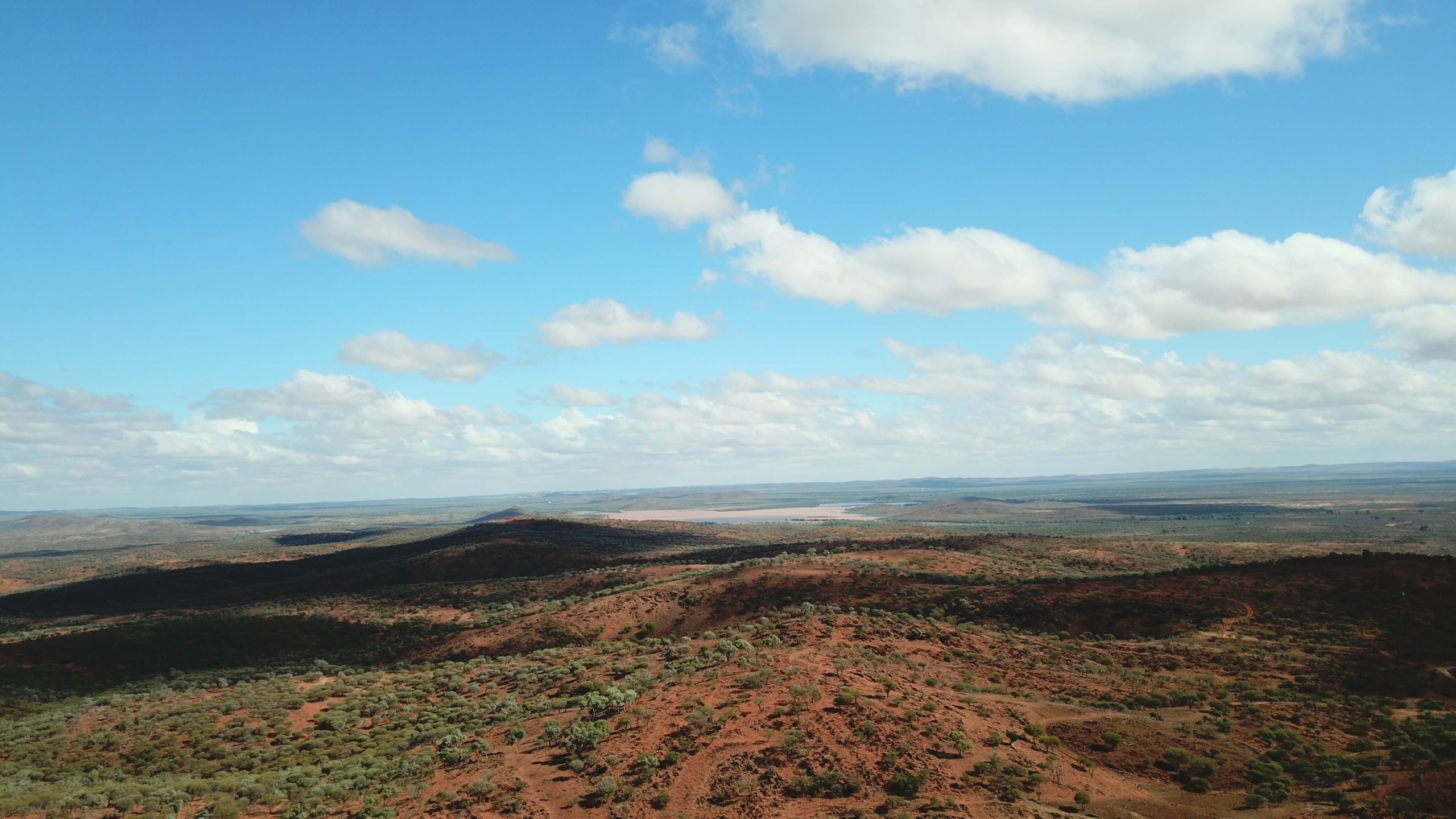
Broken Hill NSW MLEM for IGO 2022